What is the mission of the Church?
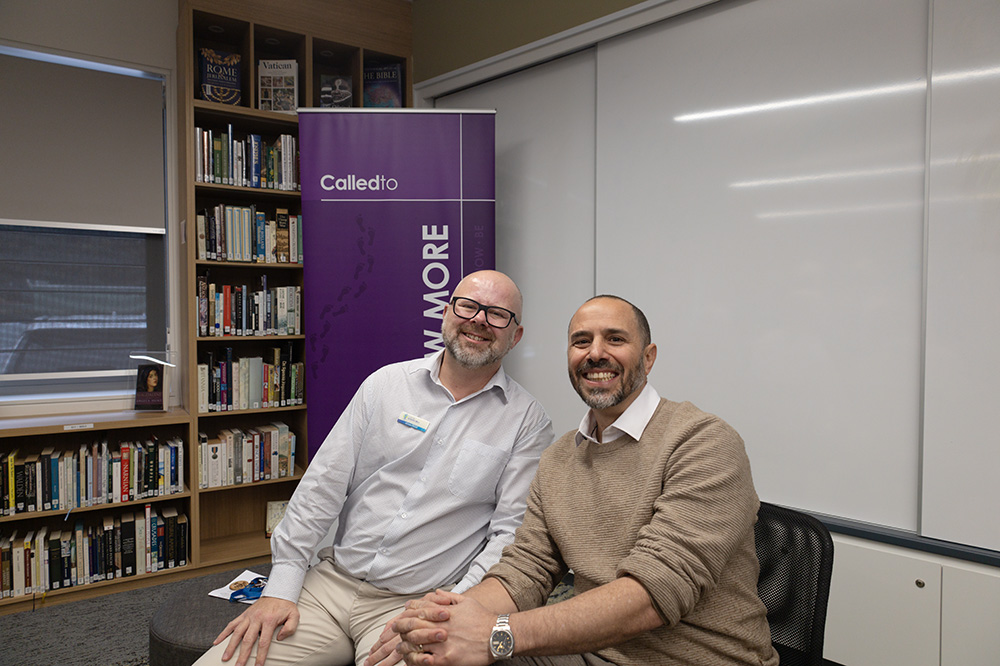
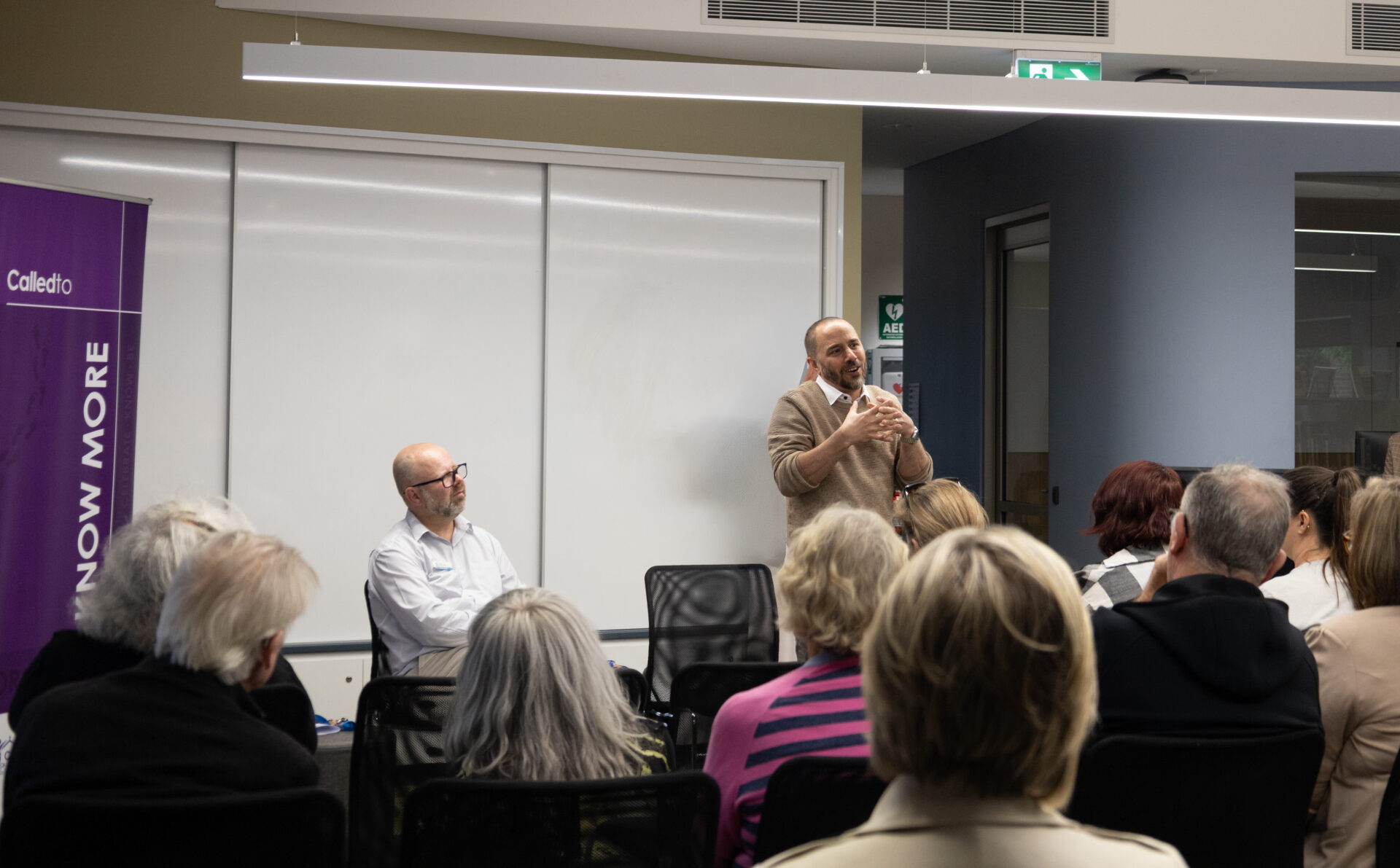
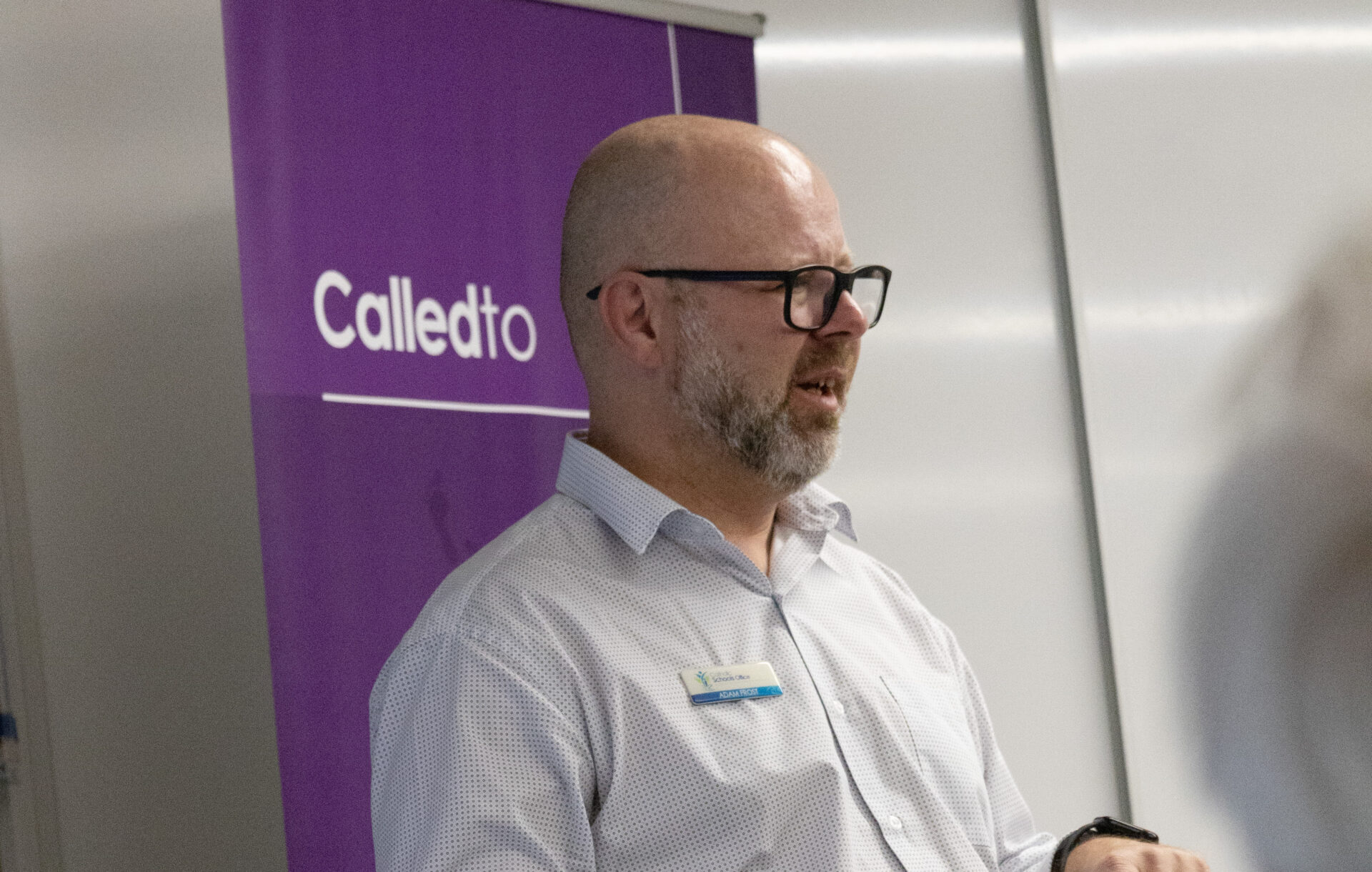
At this month’s Called to Know More session, panellists Brendon Mannyx and Adam Frost unpacked this timely question, inviting participants into a rich conversation about faith, mission and the Church today.
Featured Posts

Beyond the curtain: The story behind ASPIRE
19 October, 2026
The class that made history
9 October, 2026
It’s a question that seems simple enough. Many of us might instinctively point to evangelisation, education, social justice, worship or Mass. All are important expressions of the Church’s life. But a recent panel discussion featuring Brendon Mannyx Outreach Partner from the Diocese’s Mission and Evangelisation team and Adam Frost Education Officer from Catholic Schools Maitland-Newcastle invited participants to look deeper.
Beneath every conversation about parish renewal, youth engagement, Catholic identity lies a more fundamental question: why does the Church exist at all?
The answer, the panellists suggested, changes everything.
Mission begins with God
Too often, conversations about mission begin with the Church itself. What should we be doing? What programs should we run? What priorities should we focus on?
For Brendon, understanding mission begins with understanding God.
“God wants the most intimate relationship with us,” he said, reflecting on God’s desire to draw humanity into a loving relationship. If God’s mission is one of invitation, communion and self-giving love, then the Church’s mission is to continue that same work.
“If that’s what God’s purpose is and God’s mission is, then our mission becomes carrying on that same purpose.”
It is a powerful shift in perspective.
Mission ceases to be simply one aspect of Church life and becomes the lens through which all Church life is understood. Schools, parishes, ministries and agencies are not separate from mission; they are expressions of it. Their purpose is not merely to function efficiently but to help people encounter the love of God.
In this sense, mission is not an activity. It is about relationship. And in a world experiencing increasing loneliness and disconnection, that may be more important than ever.
The Church exists for God's kingdom
The Church exists because God is already at work in the world, calling people into communion and a relationship. The role of the Church is not to create God’s mission but to participate in it.
That understanding challenges a temptation that every generation of Christians faces: the temptation to become focused on preserving the institution rather than serving its purpose.
Adam aptly defined this when discussing the opportunities and challenges facing the Church today.
“The greatest opportunity for the Church is in realising that it exists for the sake of God’s Kingdom.”
Likewise, one of the greatest obstacles is when the Church becomes preoccupied with itself.
“When the Church gets stuck looking in, concerned with itself and self-preservation,” he warned, it risks losing sight of its mission.
Creating spaces for encounter
If mission begins with God’s invitation, what does that look like in practice? Throughout the discussion, one word surfaced repeatedly: encounter.
“Encounter is a space of invitation to experience God’s love,” said Adam.
There is something deeply hopeful in that vision. It reminds us that faith is shared not primarily through strategies but through relationships. It is often in moments of welcome, hospitality, conversation and accompaniment that people begin to encounter Christ.
This understanding also broadens our view of where mission happens. It happens in churches, certainly. But it also happens in classrooms, staffrooms, sporting fields, hospitals, boardrooms, at the airport, in prisons, in family homes!
Mission unfolds wherever people make space for genuine human connection and reflect something of God’s love to those around them.
The discussion repeatedly returned to the idea that our communities should be places where people feel seen, valued and invited to belong – because belonging often creates the conditions for encounter.
From spectators to participants
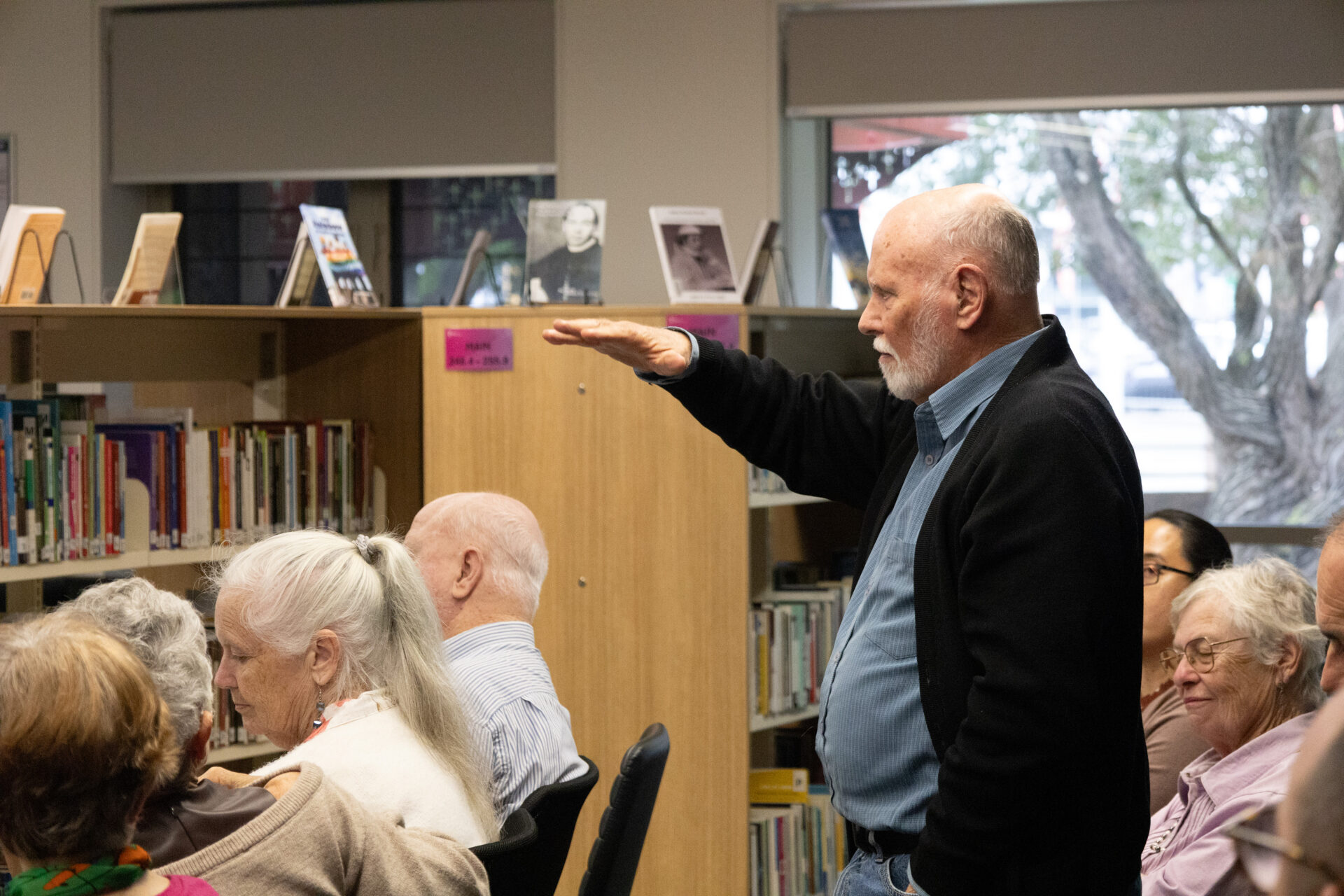
One of the strongest themes to emerge from the panel was participation.
Healthy communities are rarely built by spectators. They grow when people recognise that they have something to contribute.
Reflecting on the recent visit of the major relic of St Carlo Acutis throughout the Diocese, Brendon spoke about the enthusiasm he witnessed among those who were involved.
“There was a real sense of excitement about being invited to be a part of a project together,” he said.
The significance of that observation extends well beyond a single event. People want to contribute to something meaningful. They want to know their gifts matter. They want to be part of building something bigger than themselves.
That desire for participation sits at the heart of mission.
It is why parishes thrive when parishioners take ownership. It is why schools flourish when students and staff share a common purpose. It is why ministries become life-giving when people move from simply receiving to actively serving. Mission is not something done for people, instead it is something people are invited into.
What about young people?
The discussion also tackled one of the most common questions facing the Church today: how do we engage young people?
This requires a focus on trust. Adam reflected on his own introduction to ministry.
“Someone trusted me enough to give me a job,” he recalled.
It was not a high-profile leadership role. It was changing overhead slides at Mass. Yet it became significant because it communicated a simple message: you belong here, we trust you
That insight offers an important lesson. Young people, like all people, are looking for authenticity, purpose and connection. They are looking for places where they can contribute, not merely consume.
The challenge for the Church is not simply to create opportunities for young people to attend. It is to create opportunities for young people to participate, lead and shape the communities they are part of. As the discussion suggested, involvement often begins with something as simple as being trusted.
A call to faithfulness
If there was one thing noticeably absent from the conversation, it was quick fixes and easy answers. There were no formulas for renewal. No certainty about exactly what the future of the Church will look like. Instead, there was a recurring invitation to faithfulness.
An invitation to listen, to discern and to trust.
As Brendon reminded us, “No one else has ever been the Church of Maitland-Newcastle in 2026 before.”
Every generation receives the Church shaped by those who came before it, yet each generation faces the task of discerning what faithful participation looks like in its own moment of history.
Perhaps that is the mission before us.
Not to have all the answers or control the outcome, but to make room for encounter. To build communities where people can belong, where they can ask questions, share their stories and experience the love of Christ through those around them. Because mission is not another task on the Church’s agenda. It is the reason the Church exists at all.