Canon Law: Supporting the Church to serve its mission.
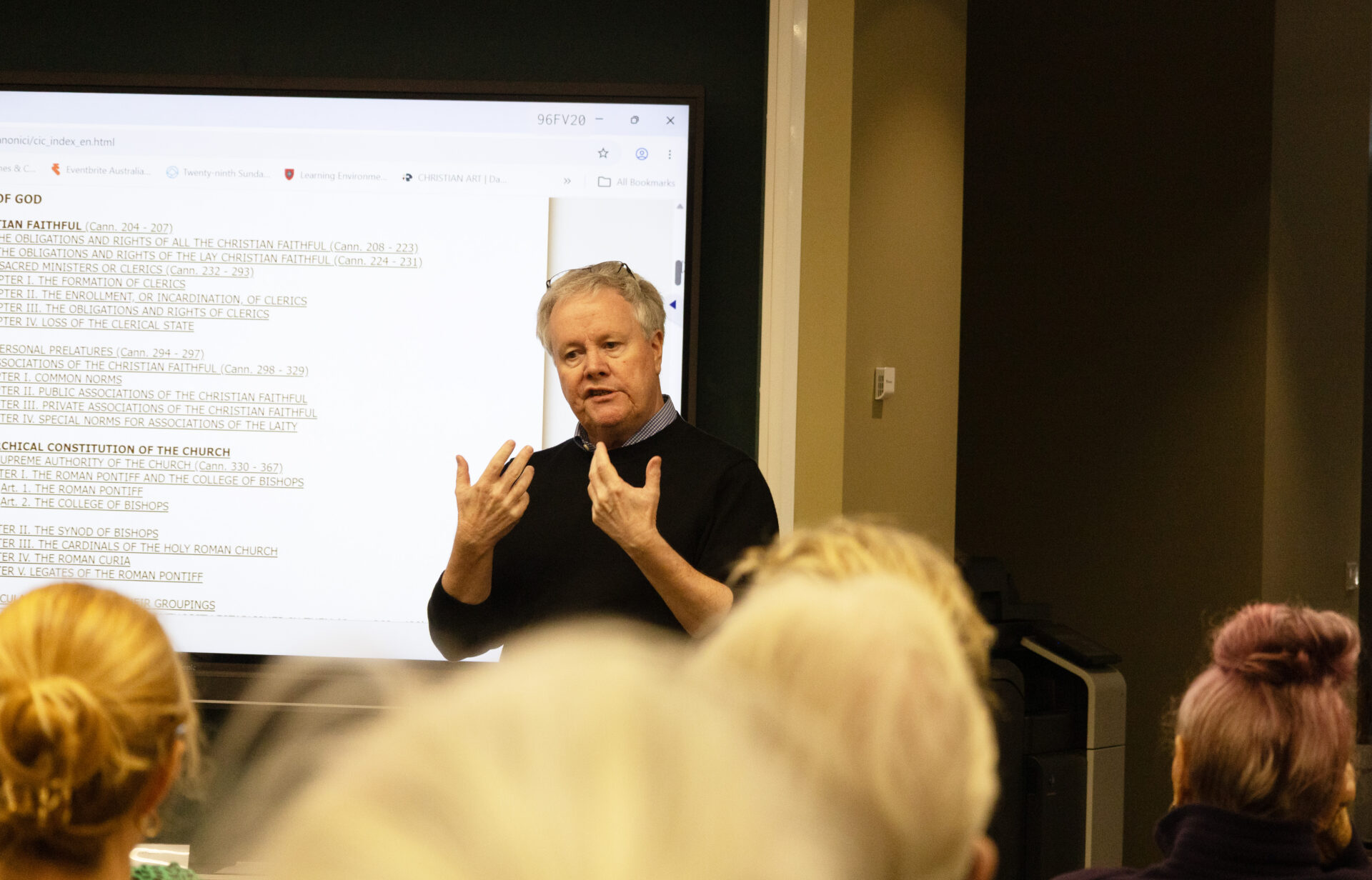
What role does canon law play in the life of the Church? Fr Matthew Muller explores its purpose, significance and impact in a recent Called to Know More session.
Featured Posts

The Josephite Sister keeping Fr Julian’s story alive
30 October, 2026
Beyond the curtain: The story behind ASPIRE
19 October, 2026
The class that made history
9 October, 2026For many people, canon law can sound complex, technical or reserved only for bishops and church lawyers. Yet, as Father Matthew Muller explained during a recent Called to Know More formation session, canon law is far more than a book of regulations. It is the framework that helps the Church organise its life, safeguard its mission, protect people’s rights and ensure that the Gospel can be proclaimed effectively.
At its simplest, canon law is the legal system of the Roman Catholic Church. Rooted in Scripture, church tradition, and centuries of lived experience, it governs everything from the celebration of the sacraments and the responsibilities of bishops and priests to parish administration, diocesan governance, Catholic education and the stewardship of church resources.
While law is often associated with restriction, Fr Matthew shared the perspective that canon law is “2,000 years of good and bad experience about how Christians live together.” It developed to help communities resolve disputes, clarify responsibilities, establish good governance and maintain order within the life of the Church.
“Ultimately, it is borne out of lived experience,” says Fr Matthew.
Understanding how canon law works alongside civil law is important. While canon law governs the internal life of the Church, it does not replace the laws of the land. Church organisations in Australia are required to comply with the civil law. Canon law, meanwhile, provides the framework for the Church’s pastoral, sacramental and governance responsibilities.

As Fr Matthew explained, the two systems serve different purposes but often work side by side. Civil law regulates the Church’s obligations within society, while canon law guides its mission, ministry and internal administration. Together, they help ensure accountability, good governance and the effective stewardship of the Church’s people and resources.
Canon law shapes the everyday life of Catholics, often without them realising it. Every parish, diocese, school, ministry and Catholic organisation operates within structures established by church law. Whether it is appointing a parish priest, establishing a parish finance council, maintaining sacramental records or overseeing church property, canon law provides the framework that allows these activities to function effectively and consistently.
Many Catholics would be surprised to learn that canon law also places a strong emphasis on participation. While the Roman Catholic Church is hierarchical, authority is not intended to be exercised in isolation.
“Decisions in the Diocese need to be made collaboratively, through listening closely to others,” says Fr Matthew.
This principle is reflected in the many councils and consultative bodies that assist bishops and parish priests. Parish Pastoral and Finance Councils, Diocesan Councils and Advisory Boards, and ministries enable clergy and laity to work together in discerning priorities and responding to local needs.
Fr Matthew described these bodies as “structures of participation”. Their purpose is not simply to maintain existing programs but to help communities ask important questions about the future: Where is God calling us? What are the needs of our community? How should we direct our resources and energy?
The session also highlighted another often-overlooked aspect of canon law: protecting rights. Formal decisions made by bishops and church leaders are governed by established processes and, in many circumstances, people have the right to seek clarification, review or appeal.
“It’s meant to protect all of us. People have the right to say, ‘I don’t agree with that,’” says Fr Matthew.
This legal framework helps ensure transparency and accountability while protecting both individuals and communities from arbitrary decision-making.
Ultimately, Fr Matthew’s presentation showed that canon law is not primarily about rules, but about creating structures that help the Church fulfil its mission and to ensure that the Church can plan for the future, participate collaboratively and remain focused on proclaiming the Gospel.