St Francis: The radical saint, softened with time
Special guest Mark Toohey takes us beyond the “plaster saint,” revealing St Francis as a living challenge to how we relate to each other, the Church, and the world.
Featured Posts

Chasing big dreams, one finish line at a time
25 September, 2026
The simple power of being seen reading
4 September, 2026
A family woven into 100 years of St Clare’s
4 September, 2026History has a way of softening radical people.
Over the centuries, St Francis of Assisi has been transformed into the patron saint of birds, garden statues and peaceful animals, wrapped in sentimentality and gentle devotion.
But the real Francis was far more confronting in his time.
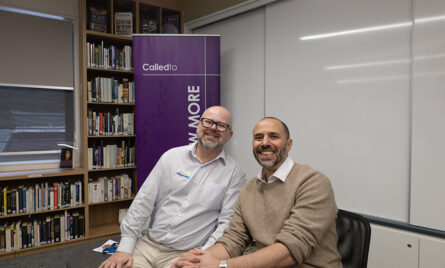
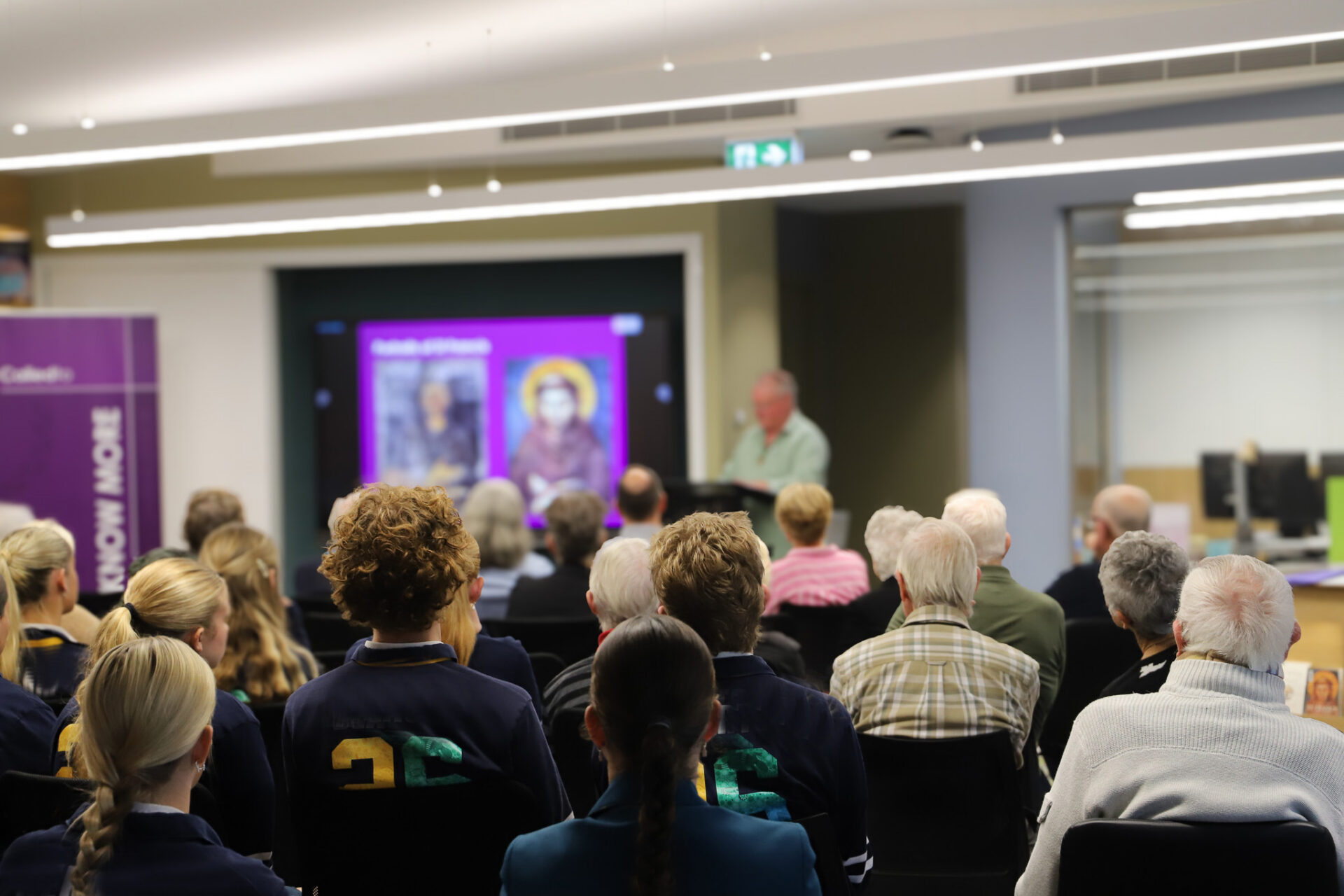
At our recent Called to Know More gathering marking the 800th anniversary of St Francis’ death, Mark Toohey, a former Franciscan friar and lifelong student of the Franciscan tradition, peeled back the layers of nostalgia to reveal a figure who deeply challenged the values of his time and continues to challenge ours.
Francis rejected wealth in a culture obsessed with status. He embraced the poor, crossed enemy lines to meet outsiders and chose vulnerability over power. And perhaps that is why he still matters.
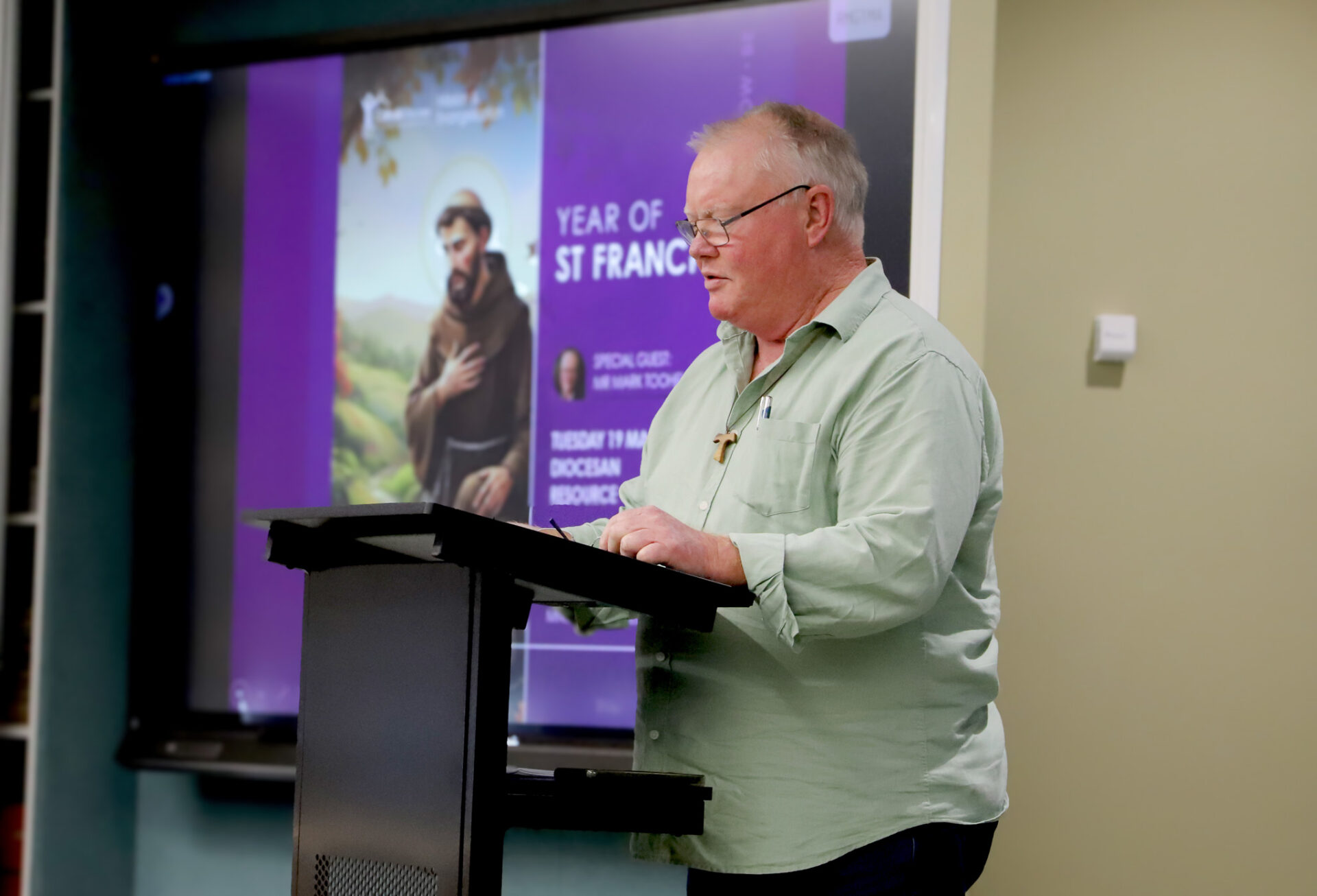
Mark’s talk reminded us that Francis’ world was not so different from our own. Twelfth-century Italy was marked by inequality, unrest and concentrated wealth and power.
The son of a wealthy cloth merchant, Francis pursued status and military ambition until imprisonment and illness changed him. The life he once desired felt hollow, and he turned toward the margins of society.
Francis’ conversion was gradual with one moment capturing that transformation completely. Dragged before the bishop by his furious father after giving away the family wealth to the poor, Francis stripped naked in the town square, and renounced his inheritance, declaring that he recognised only one Father: God. It was an act of rebellion, vulnerability and liberation all at once.
We can find ourselves romanticising about simplicity in our hectic world, but Francis actually lived it. He rejected symbols of status, wore peasant clothing and lived among the poor. In doing this, Francis was challenging the assumptions about wealth, status and power that shaped the society of his time.
What made Francis truly radical; however, was not simply his poverty. It was who he chose to stand beside, and how deeply he allowed himself to be moved by them.

Mark’s talk focused on Francis’ encounters with lepers, people feared and rejected by society. Francis admitted he once recoiled from lepers, yet among them he experienced spiritual transformation.
Francis did not approach the poor as objects of charity from a safe distance. He allowed himself to be changed by proximity to suffering. He believed Christ was encountered not through status or influence, but in wounded and forgotten people. His care was not strategic or detached; it was tender and real.
That same tenderness extended to the natural world. Francis saw creation not as a resource to be used, but as a gift to be revered. For Francis, caring for people and caring for creation were expressions of his love for God.
Pope Francis echoes this same conviction when he wrote that we must hear “both the cry of the earth and the cry of the poor.” (source). For both men, concern for human dignity, peace and creation cannot be separated.
Pope Francis warned against a “throwaway culture” where people and creation are valued only for usefulness or profit. Francis of Assisi stood against that logic eight centuries ago by insisting that every person, especially the forgotten, possessed inherent dignity.
It is no coincidence that Jorge Mario Bergoglio chose the name Francis when he became pope. Again and again, Pope Francis has pointed to Saint Francis as a model for a wounded and divided world. In Laudato Si’, he described St Francis as “the example par excellence of care for the vulnerable and of an integral ecology lived out joyfully and authentically.”(source)
In his Called to Know More talk, Mark highlighted that what drew thousands to Francis was not perfection, but authenticity. Within a decade, the Franciscan movement exploded across Europe because people recognised something genuine in the way he lived.
Too often, history remembers Francis as passive because the alternative can feel more difficult. The real Francis invites us to question the values we take for granted.
Mark’s talk drew together the Francis who embraced poverty, crossed enemy lines and found God among the rejected. What united it all, Mark reflected, was love, a love so rooted in Christ that it could not help but overflow toward every person and every creature Francis encountered. Eight hundred years on, that love remains the most countercultural thing about him.
About Mark Toohey
Mark was inspired to become a Franciscan friar after reading a biography of St Francis of Assisi as a teenager. In his twenties, he worked and studied in Australia and New Zealand, leaving the order shortly before making final vows and being ordained. Although he is no longer a friar, Mark continues to draw inspiration from the life and example of St Francis. After completing degrees in Theology and Social Work, Mark worked in a range of social work and community development roles. These have included supporting people living with HIV/AIDS and Hepatitis C, migrants and newly arrived refugees, and men experiencing homelessness. In recent years, he worked across the Diocese to promote the international development work of Catholic Mission, before retiring in 2021.