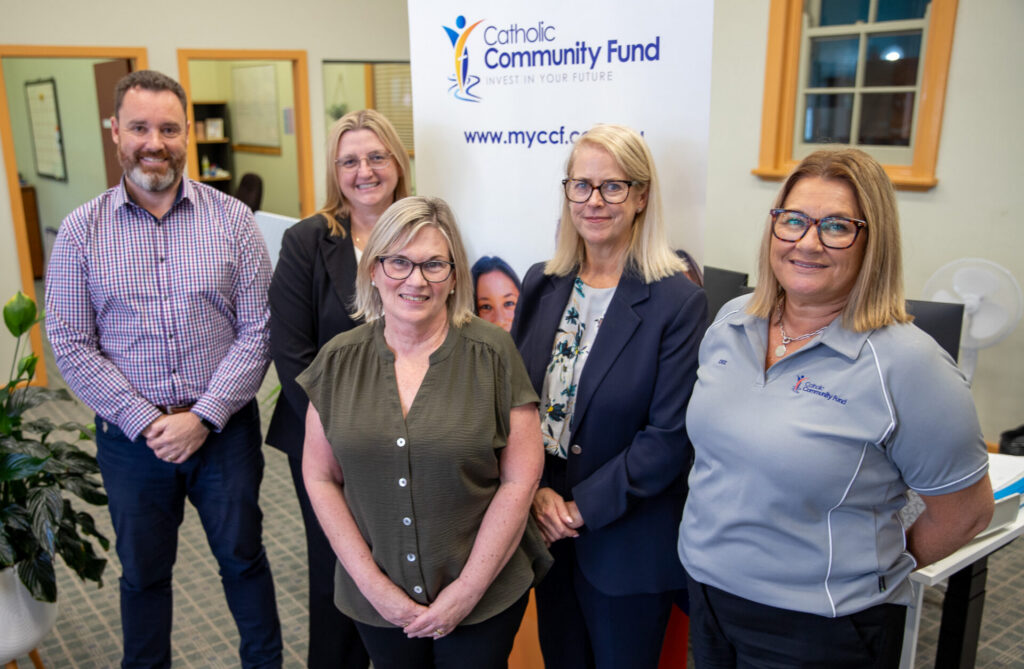
From Typewriters to Digital Banking: retiring after 33 Years
Kathryn Weekes never planned to stay at the Catholic Community Fund for 33 years.
Yet what began as a temporary favour grew into a lifetime of service, friendship and quiet dedication to others.
Featured Posts

Beyond the curtain: The story behind ASPIRE
19 October, 2026
The class that made history
9 October, 2026
Kathryn never intended to spend the rest of her career at the Catholic Community Fund (CCF). In fact, she thought she was only helping out for a day.
“My brother was managing the team at the time. They were short-staffed, it was end of financial year, and he was desperate for help,” Kathryn said.
What began as a short-term favour in 1992 became a lifetime of quiet service and faithful commitment to the people of the Diocese of Maitland-Newcastle. For more than three decades, Kathryn Weekes became part of the fabric of the CCF, witnessing enormous change while remaining grounded in the values that mattered most to her: kindness, patience and putting people first.
Before joining the Diocese, Kathryn worked at the Maitland Mercury after leaving school in Year 10 and completing TAFE studies. She describes it as a different era, one in which university was rarely encouraged for young women of her generation.
“The boys go to uni, the girls finish school at Year 10. Off you go, get married and have a family,” Kathryn recalled.
Like many parts of Kathryn’s story, family and faith were deeply intertwined. She grew up in Raymond Terrace Parish, and her family has maintained strong ties across the Diocese for generations.
“My mother had to pray for a priest or a nun in the family. She didn’t get one of those, but she ended up with five of her children working for the Diocese and some of the next generation. It has been a family affair,” she said.
After eight years at the Mercury, Kathryn left work to raise her two children. A few years later, her brother called asking for temporary support at the CCF.
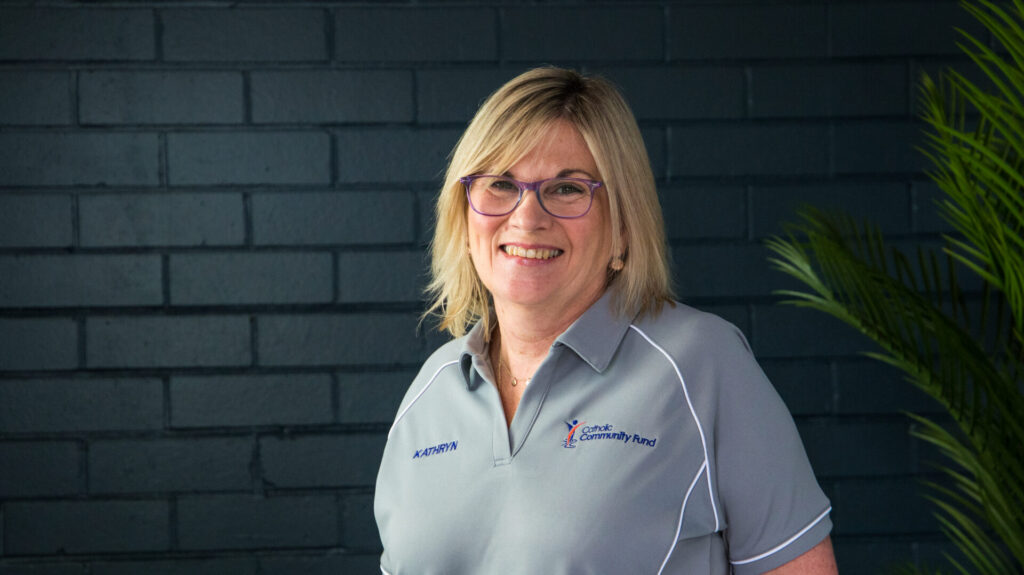
That one day turned into more than three decades, with Kathryn’s role evolving alongside enormous technological and organisational change. She saw the CCF move from typewriters, tractor-fed printers and handwritten processes to digital banking systems, online ticketing and increasingly complex compliance requirements.
One of her favourite memories from the early years still makes her laugh.
“The old printers would chew up the bank statements, so I was ironing the statements because you couldn’t reprint them,” Kathryn said. “And the ones we couldn’t salvage, I was retyping on the typewriter.”
For much of her career, the CCF operated with a highly personal approach to customer service. Clients regularly visited the office, phoned staff directly and built long-standing relationships with the team. Parents would bring children in to open accounts, and those same children would return as adults with families of their own.
“Over time, those relationships often extended across generations, with staff coming to know clients and their families well,” she said.
She also speaks warmly about elderly clients she visited on her way to and from work, collecting deposits or dropping off banking paperwork. One woman in her 90s would always have a cup of tea and homemade cake waiting for her.
“Once, she crocheted me a beautiful tissue box cover,” Kathryn remembered fondly.
Those relationships are what Kathryn says she will miss most.
“I’ve always loved the work here,” she said. “It hasn’t felt like a job. Serving people and talking to the customers … it’s always been a great journey.”
The work of the CCF was always about far more than banking for Kathryn. At its heart, she saw a values-based organisation where profits supported pastoral works, not-for-profit community initiatives and ministries across the Diocese.
“Many customers chose to invest with the CCF not simply for financial reasons, but because they believed in what their money could help achieve for the community,” Kathryn said.
“Why would you not want to feel good about where your money goes?”
Throughout her career, Kathryn has supported student banking programs in schools, visited parish agencies and aged care facilities, coordinated colouring competitions and worked closely with families and volunteers across the Diocese.
Her commitment to care extended beyond the workplace. Kathryn balanced work with years of supporting family members, including caring for her sister, who lived with Multiple Sclerosis (MS). In 1999, Kathryn herself was diagnosed with MS, though she continued working part-time while supporting others around her.
“Work has been a good choice for me,” she reflected. “I could come to work, help people, then go home and look after whoever I needed to look after.”
As Kathryn prepares for retirement, she is looking forward to caravanning adventures, gardening, baking, spending time with her grandchildren and welcoming another grandchild later this year.
Still, after 33 years, it is impossible to separate Kathryn from the story of the CCF itself.
Operations, Systems and Client Relations Manager, Paul Roderique, says Kathryn’s contribution to the CCF team will be enduring.
“Kathryn has been a constant for clients and staff, a source of trust, advice and support,” he said.
“She managed our first system upgrade, which was a huge undertaking. Her expertise set the CCF up to future-proof its operations and keep pace with an extremely fast-moving financial services environment,” he said.
Though Kathryn would likely describe herself simply as “kind and helpful”, her legacy is far greater than that. Over decades of change, she quietly embodied the mission of the CCF – putting people first, building relationships and reminding generations of clients that banking could still be personal, compassionate and grounded in community.