
Disclosures

Featured Posts


A journey of preparation and hope
6 March, 2026
The stories that shape us
6 March, 2026When a child or young person (or even adult in some cases) makes a disclosure, they are sharing their experiences of abuse or maltreatment by others. Disclosures can be a one-off event which is rare, and others can take place over time sharing small bits of information.
When someone makes a disclosure, this can be planned or accidental. The type of disclosure a young person makes may be influenced by factors such as age when the abuse occurred, and their age at the time of the disclosure.
Children who feel safe, have a trusted person, are given the opportunity to tell, have social supports, and are being provided with information and education on topics such as safety, abuse, sex and consent are more likely to disclose their abuse.
Disclosures can be shared in many ways including verbal and non-verbal, directly or indirectly, complete or partial, accidental or intentional. It is important that when a child discloses their abuse that they are believed. Drip feeding information or being reserved with providing further details about their disclosure does not mean they are being untruthful. Many children who make disclosures feel a sense of shame, embarrassment, fear, or have an inability to understand what has happened to them and what is happening when they make the disclosure.
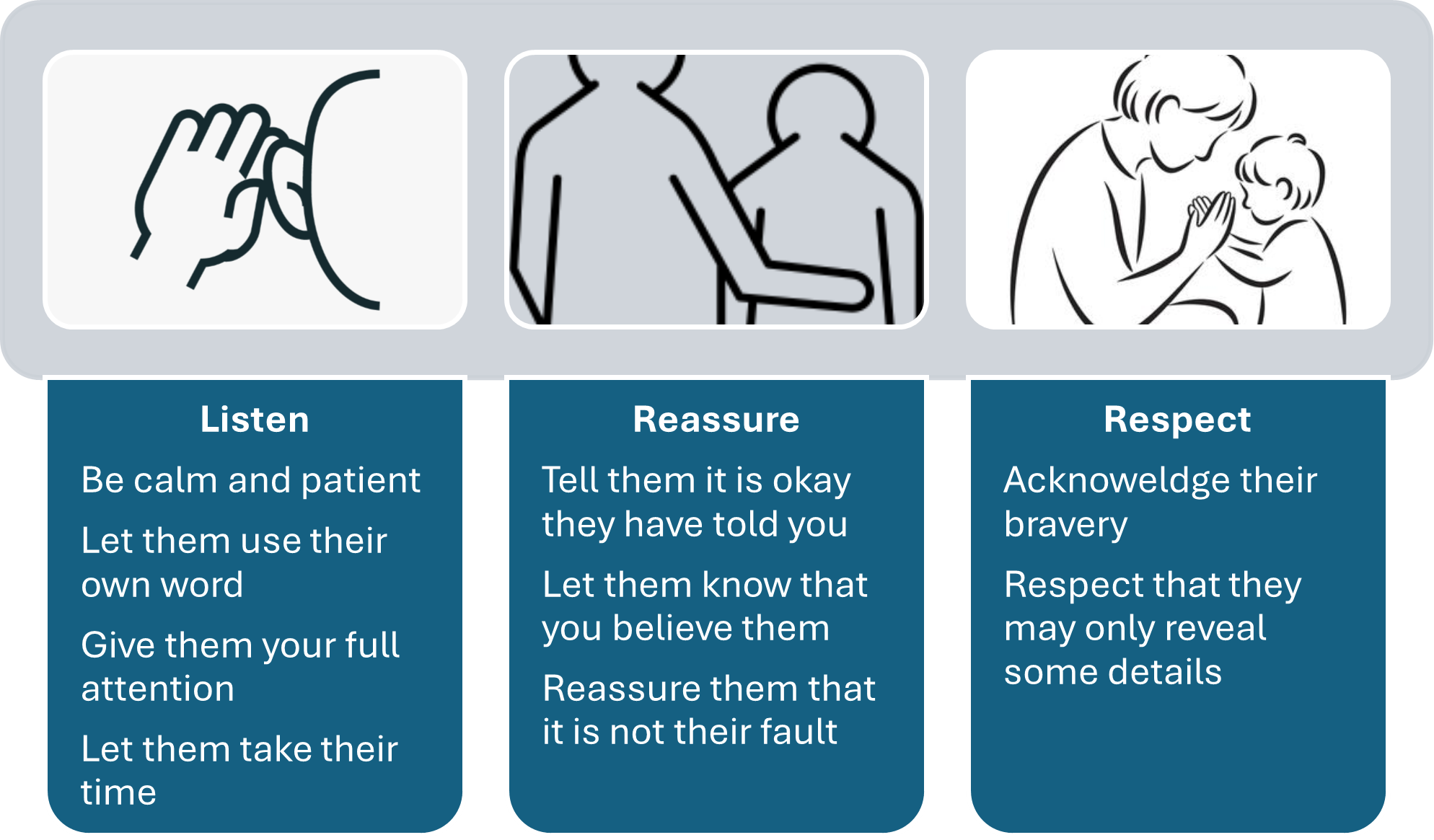
It is important to remember, however, that if a child or young person has decided to speak to you about their experiences of abuse, then there is a good chance they trust you. By remaining calm and empathically listening and offering support, you are helping the child or young person. What you can do when responding to a disclosure is:
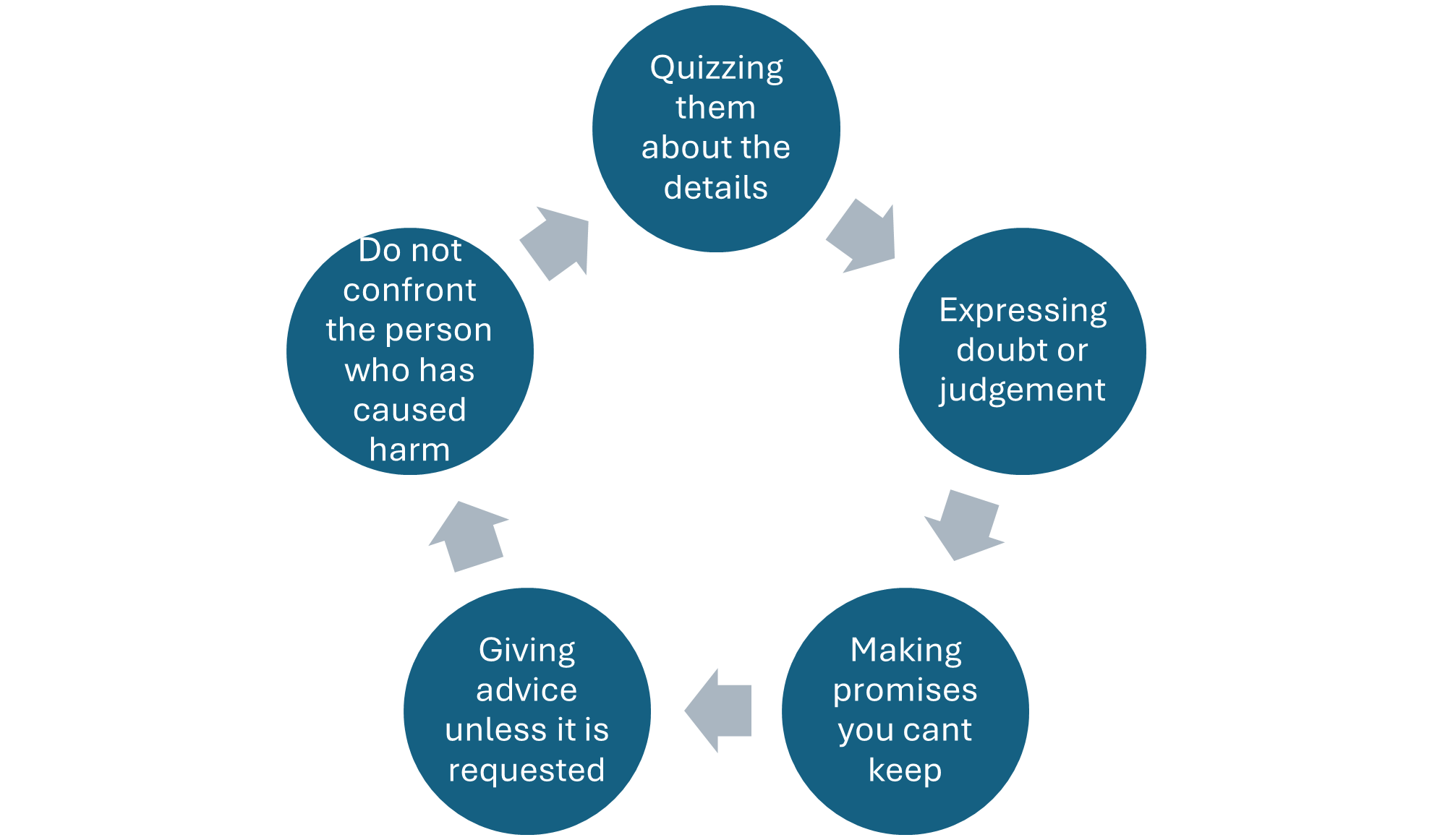
It is equally as important to avoid the following when responding to a disclosure:
Statistics
In 2025 The Australian Child Maltreatment Study collected information about Child Sexual Assault victimization from a nationally representative sample of 8503 individuals aged 16 and over.
| 0-9 years | 10-17 years | 18-21 years | 22-24 years | 25-29 years | 30-39 years | 40-49 years | 50-60 years |
| 17.3% | 52.9% | 10.3% | 3.3% | 4.0% | 7.1% | 3.1% | 2.1% |
Results from the overall study showed, 70.2 % first disclosed before age 18, comprising more women (73.7 %) than men (60.4 %); and with participants aged 16–24 more likely (81.2 %) than people aged 25–44 (67.8 %) and 45 or more (68.7 %). Among individuals who disclosed, almost half (45.6 %) first disclosed within a year; with the average delay of disclosing being 7.1 years. One in 10 people aged 25 or more (11.1 %) delayed more than 20 years. First recipients were typically mothers (30.9 %) and friends (24.9 %). Most people felt supported (79.8 %), especially those aged 16–24 (87.3 %).
Reporting a disclosure
The timing of the child or young person’s disclosure will influence their immediate needs and this, in turn, will determine the most appropriate response. For a child or young person who discloses that they are currently being abused, the immediate priority is safety and protection from further abuse. Anyone who suspects that a child is at risk of being abused and/or neglected should report it to the appropriate services and statutory authorities immediately.
- Child Protection Helpline 13 21 11
- Police 000
- Office of Safeguarding – Internal reporting for the Diocese
References
- Child Abuse & Neglect – Volume 160, February 2025, 107183: Disclosure and non-disclosure of childhood sexual abuse in Australia: Results from a national survey – ScienceDirect
- Child Abuse & Neglect – Volume 170, December 2025, 107803: Characteristics of first disclosure of child sexual abuse: age, delay, recipient, and feeling of support – ScienceDirect
- Australian Institute of Family Studies – Responding to children and young people’s disclosures of abuse: Responding to children and young people’s disclosures of abuse | Australian Institute of Family Studies
- Royal Commission into Institutional Response to Child Sexual Abuse – Research released on long term effects if disclosure: Research released on long-term effects of disclosure | Royal Commission into Institutional Responses to Child Sexual Abuse